Showing posts with label Science. Show all posts

What is a perpetual machine

How a perpetual machine works


A perpetual device is quite intricate and a new discovery in science. This is a device that can run without breaking down, I call it 100% machine. Its energy source is clean, it is the future device that can run our Industrial turbines, cars, motorcycle etc.

     Have you ever wondered why our cars or Gen break down ~~~~It is not efficient, it suffers from wears. A perpetual device never stops, it create an amazing environment and sustainable energy source. I remember in 2014 on one of Seeds(Schlumberger excellence in education development) Many schools where supported with funds to invent a new energy source, students came up with ideas like biogas extractor, electric cars, multicell Blender(CSS ORO Port Harcourt). But One school got what the Judges where looking for, this student came up with an idea of building a car that runs with water using the principle of HYDROLYSIS, it was a shock to everyone but I knew what it was a perpetual machine.
      Research been carried out now at Css Oroworukwo Port Harcourt will bring hope to the country, elite students of Css are currently working on a Perpetual device that will provide the school with electricity. You can watch the video to understand more.WE LOVE COMMENT

Read More »

Top ten ways to go pro in Science


Top ten things to do to become an expert in Science

The reason why we hardly succeed in science courses is we do not apply life hacks. Science as a course is inherent and deep, you succeeding in it you have to apply "hacks".

    Top ten life hacks to help you go pro in  science:

1.Get ready to learn. Learning is all about focus and thinking. If you don't focus you cannot think. Focus + Thought =Content (Understand more) The more you focus your will power to learn the easier everything becomes. I am a testimony anytime I focus my strength to learn I always get a perfect results.
2.Role Model: Having a perfect role model to learn from is the perfect key to succeeding your science courses. Who is a role model ? A role model is the person your adore or admire to be like, who has made a massive achievement. E.g Albert Einstein, Thomas Alva Edison, Issac Newton. Etc you can still choose somebody who is close to you or your science teachers.
3.Create your own Inventions: Do you have passion thinking to build new system/devices. Challenge your self more get creative and develop something new or you can modify any existing solution. Get ahead of your teachers and do it first. "Our actions everyday can attribute to our success tomorrow" . What ever you do, continue in it, till you are perfect.
4.Connect with Nature: We are all connected to the Mother nature. Connect with your environment and feel it. All you are looking for is close by. Call on to nature it will answer to your request.

Related post: Go pro in physics

5.Think Positive: Every word you alter negative or positive all have an after effect. You are a human dynamo. You send to the universe what you want and it gets back to you in no time.
6.Food: Eating the right food will improve your memory. We have energy giving foods for the brain like; Apple, pineapple, guava, paw-paw. The brain consumes a lot of energy capable of lightning a 60 watt bulb. Eat lots of vegetable, fish. Also take soya bean, its found to contain lecithin that helps boost the brain stops short term memory.
7.Master minds: Look out for people who have like minds and form alliance with them. Build your dream with them and things will be more easier than before.
8.Invisible teachers: The term invisible teacher is an act of communicating with legends of science. This method was applied by "Napoleon Hill" Author of Think and Grow rich. He communicate with this invisible teachers in his mind, by so doing he got the right information on how to solve any given problem. All you need do is to meditate and think about any legendary figure in science. Ask them to transfer same knowledge they used to solve any given problem when.
9.Autosuggestion: This is the process of conditioning your mind and instructing it on what to do or what to gain.
10.Faith:All you need is faith. Its an external elixir that gives power to the impulse of thought. All great thinkers have faith, believe that you can do a thing and it will surely come to pass.

  We love comments. You can share with us what other ways to go pro in science drop yours

Read More »

Seven planets begin building Seven pla shields to


Seven planets have begun the arduous task of building planetary protective shields in an effort to keep out migrants from Earth, after NASA announced their discovery yesterday.
While the discovery was cause for excitement here on Earth, on those planets it has been greeted with dread and terror.
‘Earthlings are a bunch of drug-crazed rapists, we can’t have them soiling our beautiful planets. We need biodomes around every single planet and they must be protected by adamantium (which is real here). No-one from Earth gets in,’ said Zavoxx-5, one of the more liberal aliens.
Some aliens have even blasted their governments for not being more prepared.
‘We knew that we’d get spotted eventually. We should have begun the work a long time ago. The last thing we need are a bunch of filthy Earthlings sneaking across our borders because they’ve ruined their own planet,’ said Viwold-322.
Each planet has blasted out a greeting in universal morse code in the hope that Earth receives the message before attempting to make contact.

Source: http://zonnews.com

Read More »

We have come across many reports regarding earth


We have come across many reports regarding earth and its changes in recent times and not many materialize. However, this time NASA has confirmed that earth will experience total darkness for 15 days in March 2017 starting from March 15 to March 29.

According to NASA this phenomenon was in the pipeline for a long period and the astronomers fhrom NASA have informed that the world will experience a strange event from March 15 at 3:00 am and it is likely to continue until March 30, 4:45 pm.
The officials believe this blackout is the result of an astronomical event between Venus and Jupiter. Charles Bolden, head of NASA issued a 1000 page document which explains the event in detail to the White House.
The reports claim that Venus and Jupiter will be very closely engaged and they will be separated by a mere 1 degree. Venus will surpass to the south-west of Jupiter which results in Venus shining 10 times brighter than Jupiter and this light will heat up the gases in Jupiter causing a reaction. The resulting gas reaction will release a never before seen amount of hydrogen into the space which will make contact with sun at around 2:50 am.
When hydrogen makes contact with sun it will cause a massive explosion on the sun’s surface and it will have an effect on the temperature which increases to 9,000 degrees kelvin in no time.
The heat caused by the whole process will force sun to turn into bluish colour and once it changes it colour it will take at least 14 days to restore its normal temperature and retaining its normal colour of Red Giant.
Source: http://zonnews.com

Read More »

Scientist has built the next generation renewable energy

Solar cells convert light into electricity. While the sun is one source of light, the burning of natural resources like oil and natural gas can also be harnessed.
However, solar cells do not convert all light to power equally, which has inspired a joint industry-academia effort to develop a potentially game-changing solution.
Current solar cells are not good at converting visible light to electrical power. The best efficiency is only around 20% explains Kyoto University's Takashi Asano who uses optical technologies to improve energy production.
Higher temperatures emit light at shorter wavelengths, which is why the flame of a gas burner will shift from red to blue as the heat increases.
The higher heat offers more energy, making short wavelengths an important target in the design of solar cells.

The problem continues Asano, is that heat dissipates light of all wavelengths, but a solar cell will only work in a narrow range.
To solve this, we built a new nano-sized semiconductor that narrows the wavelength bandwidth to concentrate the energy.
Previously, Asano and colleagues of the Susumu Noda lab had taken a different approach. Our first device worked at high wavelengths, but to narrow output for visible light required a new strategy, which is why we shifted to intrinsic silicon in this current collaboration with Osaka Gas says Asano.

To emit visible wavelengths, a temperature of 1000˚C was needed, but conveniently silicon has a melting temperature of over 1400˚C.
The scientists etched silicon plates to have a large number of identical and equidistantly-spaced rods, the height, radii, and spacing of which was optimized for the target bandwidth.
According to Asano, the cylinders determined the emissivity describing the wavelengths emitted by the heated device.
Using this material, the team has shown in Science Advances that their nanoscale semiconductor raises the energy conversion rate of solar cells to at least 40%.
Our technology has two important benefits adds lab head Noda.
First is energy efficiency: we can convert heat into electricity much more efficiently than before. Secondly is design. We can now create much smaller and more robust transducers, which will be beneficial in a wide range of applications.

  Leave your comments for more insights.

Read More »

Nanotechnology

  I stumbled upon this topic "Nanotechnology", I felt lame about the subject. I need your opinions to learn and understand this word topic.
     Leave your opinions by commenting below.

Read More »

New discovery about spiders


Discovering the web
As a student at the University of Oxford during the 1960s, Vollrath initially focused on the flight patterns of homing pigeons, supervised by Nobel Prize-winning ornithologist Nikolaas Tinbergen. But his curiosities soon led him to focus on spiders and their webs, which had been largely ignored in academic research.
"In the early days it was about fascination with complex systems," Vollrath recalls. "The web is a complex, geometric structure, and the spider builds it, from itself, with very fine material. You think: 'How does that work? What rules does the animal use?'"

I spent a lot of time just sitting in a chair in a forest watching spiders do their thing
Prof. Fritz Vollrath, University of Oxford
Vollrath published his first paper on spiders in 1976, and followed it up with a flurry of groundbreaking studies that explored the unique properties and functions of their webs. His field research took him across the world, including long spells in Panama and Papua New Guinea, on the trail of exotic species with rare qualities.
"I spent a lot of time just sitting in a chair in a forest watching spiders do their thing to understand their behavior," he says. "If you find an interesting one with unusual silk...you can dissect the spider to see the silk gland and how the silk is spun."
The zoologist's revelations led to diverse collaborations.
He worked closely with architects to design buildings based on webs, and even nets for catching space debris. He took commissions from the U.S. military to study how drugs, including LSD, affected a spiders' web building.
"Caffeine was the worst because the spider is so nervous," he learned.
But the most promising applications were in medicine. Since Ancient Greece, cultures have treated wounds by rubbing them with spider webs, believing this prevented blood loss and infection. Vollrath put this tradition to the test by creating spider silk dressings in a series of
animal trials , and found they blended seamlessly within host tissue.
"Spider silk is inherently biocompatible so the wound does not reject it," he says. The silk is also biodegradable, meaning the dressing is simply eaten away as the wound heals."
"Even when the silk was not cleaned and just harvested from a web it would seal the wound, and we didn't have to remove it after."
Read: The bionic skin that can feel a tumor
The silk code
Next, Vollrath set out to analyze the thread itself as it was reeled from a spider's abdomen.
The zoologist discovered a unique alignment of the protein structures within, which proved resilient to stress and deformation. He identified this to be the source of the silk's unique strength and flexibility.
Vollrath learned that a Golden Orb Weaver spider produces seven types of silk -- each for different purposes. Dragline silk, which the spider uses to hang from, proved the toughest. This became the model for a new type of biomedical implant that would offer the same supreme strength and resilience inside the human body, while solving a production problem.
Manufacturing spider silk in bulk was impossible, as it could only be harvested one thread at a time from anesthetized spiders, and as arachnids they cannot be farmed because they are cannibals.
Vollrath sought instead to bring in the powers of silkworms, which collectively produce over
150,000 tons of silk each year through an industrial process of rearing and boiling the worms. This method has served to produce luxury fabrics for over 5,000 years, dating back to Neolithic China.
The silk from a silkworm, however, lacks the strength of spider silk, and contains a toxic glue that makes it less ideal for surgery -- but it would serve as a canvas to build upon.
After becoming the head of the new Silk Group at Oxford University, Vollrath discovered a strain of wild silkworm whose silk had similar protein patterns to that of a spider.
He sequenced the silkworm's proteins and matched them to the structure of spider dragline silk. The product of this was then dissolved to remove the toxic glue and then reconstituted as a tough, clean material that the Group named Spidrex.
Read: How to create opioids for the masses
Spider surgery
The Silk Group's progress attracted commercial interest, which allowed Vollrath to launch spin-off company Oxford Biomaterials for the development of medical applications.
He looked at using Spidrex to make artificial bone, and also tested it for use as dressings and sutures, but he eventually settled on knee replacements -- an area in desperate need of new solutions.
There are 600,000 such procedures a year in the United States alone at a cost of $13 billion, and this figure is projected to rise sharply.
"With cartilage there was nothing," he says. "There were plastics, but they really did not do the job." These implants have to be taken out eventually, which can have huge complications, Vollrath points out.
The Group launched its second spin-off, Orthox, which used Spidrex to create a malleable material that could be shaped to replace knee cartilage and serve as a biocompatible scaffold to support tissue that would then regenerate over it.
"You want cells to grow into it, to populate the new cartilage and re-enforce it as they develop," says Vollrath. "As the material degenerates the cells use it as a scaffold."
The ideal for the team was to create an implant that would be replaced with original cartilage within five years.
The implants are now midway through clinical trials, and Vollrath is pleased with their progress. "The people are happy and the surgeons are happy," he says, believing the implants could be widely available by 2018.
A similar scaffold concept is being applied for nerve repair, through yet another offshoot start-up Neurotex. The team are hoping to apply this to the central nervous system and help reverse paralysis caused by severe spinal injuries -- yet another field in dire need of more options.
The field of silk-based medicine is now teeming with possibilities.
The Silk Age
New studies are published almost every day exploring applications for silk in regenerative medicine. Research teams around the world are producing new materials using a range of creative techniques, such as implanting spider DNA into goats and even using yeast to spin silk.

Silk could be standard practice for many medical procedures
Prof. Insup Noh, Biomaterials Research journal Editor
Silk material is now also being used for sutures, scaffolds, grafts and a vast selection of biomedical implants.
"(Silk) could be standard practice for many medical procedures," says Professor Insup Noh, editor of Biomaterials Research journal. "Silk materials have already been approved as a medical raw material, which is a big advantage compared with other emerging polymeric biomaterials."
Vollrath's group is now working on bicycle helmets, airplane panels and military uniforms, and studying the spider's ultra-efficient spinning process for use in advanced manufacturing. Spider webs have become a model for pollution sensors ,, while synthetic spider silk is increasingly popular for clothing .
After 40 years of rapid progress, the zoologist remains convinced he is still just scratching the surface of what his greenhouse guests can deliver.
"Spider have been around for millions of years," says Vollrath. "There is so much more to learn from them."

CNN's Jim Stenman contributed to this report.

Read More »

Learn about magnetism and its application

In this tutorial, it will be teaching us about magnet, and how it can be applied to real life problem. Focus your attention and view the tutorial.


Read More »

Importance of Physics to the World

Importance of Physics to the Society

A statement adopted by IUPAP, March 1999 was

“Physics – the study of matter, energy and their interactions – is an international enterprise, which plays a key role in the future progress of humankind. The support of physics education and research in all countries is important because:”

1. Physics is an exciting intellectual adventure that inspires young people and expands the frontiers of our knowledge about Nature.

2. Physics generates fundamental knowledge needed for the future technological advances that will continue to drive the economic engines of the world.

3. Physics contributes to the technological infrastructure and provides trained personnel needed to take advantage of scientific advances and discoveries.

4. Physics is an important element in the education of chemists, engineers and computer scientists, as well as practitioners of the other physical and biomedical sciences.

5. Physics extends and enhances our understanding of other disciplines, such as the earth, agricultural, chemical, biological, and environmental sciences, plus astrophysics and cosmology – subjects of substantial importance to all peoples of the world.

6. Physics improves our quality of life by providing the basic understanding necessary for developing new instrumentation and techniques for medical applications, such as computer tomography, magnetic resonance imaging, positron emission tomography, ultrasonic imaging, and laser surgery.

In summary, physics is an essential part of the educational system and of any advanced society. We therefore urge all governments to seek advice from physicists and other scientists on matters of science policy, and to be supportive of the science of Physics.

This support can take many forms such as: National programs to improve physics teaching at all levels of the educational system.

Building and maintaining strong departments in universities and other academic institutions with opportunities to secure grants to support research, scholarships and fellowships for both undergraduate and graduate students studying physics, adequate fund for national laboratories and the formation of new ones as appropriate and funding and facilitating international activities and collaborations.

That was a statement issued by a group of Canadian physicists to their government in 1999, citing the need for more attention and support for physics and its study in our modern environment.

Careers in Physics

Once and again, the question any scholar of any idealism asks himself is, ‘what jobs are there for physicists?’

The study of physics offers a broad range of job opportunities in

1. Meteorology

2. Telecommunication

3. Education

4. Medicine

5. Manufacturing

6. Space

7. Law and finance

8. Music and television

9. Environment

10. Architecture and Civil Engineering

11. Transport

12. Sports and Games

13. Energy and so forth.

Read More »

Top ten reasons to cultivate science culture in Nigeria

     The word "Science" has being for century and it is been over emphasized.
Science is not only a word, but a word that is synonymous to "Genius".
    This word science is intense and carries with it inherent possibilities.
  
      DEFINING THE TERMINOLOGIES:(SCIENCE &CULTURE)

√ SCIENCE: From the advanced dictionary, it is defined as knowledge about the structure and behavior of the natural and physical world, based on facts that you can prove, e.g experiment.
     But I laterally defined it as knowledge obtained by close relationship of man with his environment.

√ CULTURE: Is defined as the peoples way of life.
The lifestyle people live affects what they will become/how successful they outscores.

    WHAT IS SCIENCE CULTURE
     This is a new phenomenon.  I literally coiled it myself.
    I define Science culture as the act of living a scientific lifestyle. I.e Living and knowing the benefits of science to mankind.

        THE BIG Question ?
   How to cultivate science culture in Nigeria ?
   Nigeria is a blessed country, although it's' civilization in science development is not vast.
   Every citizen of Nigeria poses this question in their mind. "When will the country develop".Given an answer to this question, Nigeria can only be developed if we as one Nation cultivate science as part of our culture. In the sense that we take active involvement in developing the minds of young people to be scientific conscious. Knowing fully well that we are not a creation of chance but of hope.

    Top ten reasons to cultivate science culture in Nigeria:

1) Science Research. Institute: Nigeria as a developing country should find it at interest to cultivate science culture in it's' civilization. By doing so it will create more avenue for the country to build It's own science research institute, this will encourage more infrastructural development.
2) Brain Drain: It will terminate and as well reduce brain drain(movement of intellectual individuals outside the country) in the country. Talented individuals always takes the way to greener pasture, because of lack of support by the government and as well the mass.
3)Vision: if people are educated properly on the benefits of science to mankind, using the right materials, it will spur the mass to think more and worry less. It is said "A student with no book, is like a country with no vision".
4)Perfection: Come to think of it, have you ever wondered why the white heads are progressing in scientific discoveries and development.
     The reason is a clear fact, they are practicing science culture. It has changed their lifestyle and as well improved it. We should learn from others to perfect ours.
5) It will encourage a keen sense of relationship between science foreign investors and the country.
6)Niger is a gifted country with talented individuals who have dreams. There are much lone inventors in Nigeria today, if they are to be supported and enlightened, it will put Nigeria on the world map of scientific breakthroughs.
7)It will help the mass to believe and trust made in Nigeria products.
8)It will create job opportunity and as well reduce crime rate.
9)It will help to diminish importation of heavy duty machines for operations in Nigeria, thereby increasing the net profit/ income of the nation. The more educated we are, the more creative we become.
10)Last but not the least, people will be encouraged to become more productive on science development in Nigeria.

   "People with ideas, are people with direction" DJC.

Read More »

Core dreamers in Science

  Dating back in history, people had great dreams that if you look very well in our today's world you will see the effects it has laid.

Dream Defined:
   Dream can be defined as a clear concise mental picture that has an expected end.
     Dream can be an obsession for one to succeed, e.g become a scientist, web developer, engineer etc. Dreamers are bound to be great and successful. People who are ready to clear every obstacles of life to make it in life are core dreamers.
    Identifying the two core dreamers in science  I respect so much:

•Thomas Alva Edison: Is one of the dreamer, his dream to become an inventor/commercial entrepreneur started at a very young age. At about age 10, he was running a  vendor business to sell newspaper and magazine at a hub station.
      He painted his dreams at a very young age, his engagement proposed the opportunity for him to meet with great personalities that changed his life.
     You can have the same dream. Dream big and you will achieve big.

•Albert Einstein: He was a German Physicist, a genius and a well reputed scientist.
      However, at a tender age he was persuaded, rated as a low learner, but he never allowed his dreams to be taken away by mere words made by people.
    Although, during his early 20's he started making a self discovery of what he will become. He attended Zurich polytechnic where he made wave for himself.
    His dream was to unveil the physical nature of this world and make use of its potentials to help mankind. He was the father of Relativity i.e[E=MC2] and other well proposed theory.
     These are men whom with their obsession to make and lay impact to the world, has brought fame and glory to themselves.
     You can do the say. Dream of things unseen and harness its power to improve the life of human and its environment.  You can do far more better, avoid the naysayers and keep up your optimistic spirit and you will see yourself achieving your dreams.
  
     " Dream big and the amount of your success will determine the way you think. Think small and the size of your success will be small, but think big, your success will be big" .

Read More »

Origination of a Magnet

Magnet and its definition:
   The Greek made a discovery many years ago about magnet. There discovery showed that certain form of iron ore, called magnetite or Iodestone, had the property of always pointing the same way when freely suspended.
      These iron ores became known as magnetic iron ores.
Nb: Objects showing this property and made of these iron ores are known as magnets.
      Examples of magnetic materials, Iron, cobalt, nickel and steel. Non magnetic  materials: Wood, brass and copper.

        Basic laws of Magnet
1)It says that like poles of a certain magnets seems to repel each other when brought together.
2)While unlike poles attract.

POLARITY OF A MAGNET
For every known substance, it might have a positive / negative side effect. What then is polarity of a magnet ?
     Polarity of a magnet, means determination/finding the poles of magnet.

        THE POWER OF MAGNET
A permanent magnet will exert a force on a piece of iron or another magnet some distance away. The space in which magnetic force is exerted is called magnetic field.

Key Terminologies:
1)Magnetism
2)Magnetisation
3)De-magnetisation
4)Unmagnetized

•MAGNETISM: The ability of  a magnet to attract magnetic materials.
•MAGNETISATION: The process of making a magnetic material to become a magnet. E.g by electrical method and sticking.
•DE-MAGNETISATION:  The process by which a magnet loses its magnetism. E.g by electrical method, hammering & fire.
• UNMAGNETIZED: This is when a magnetic material has not been attracted by a magnet.

     Economic use of Magnets
1) Production of force field in space ship / rocket.
2)It is used in scrap yard for massive selection of metallic waste.
3)Used in production of radio, TV set and refrigerators.
4)Magnets are used in MRI machines at hospitals.
5)Magleve train is a by product of magnetism.

"The power of attraction and repulsion is a great focus on life" DJC

Read More »

Top ten most Influential Scientist

   Science

has made everything easy, but the individuals whom had made this contributions are the most important.
    Below are the list of the top ten influential scientists:

10
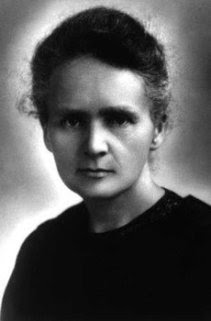
Marie Curie:1867-1934
“One never notices what has been done; one can only see what remains to be done.”

Polish physicist and chemist, Marie Curie was a pioneer in the field of radioactivity, the only person honored with Nobel Prizes in two different sciences, and the first female professor at the University of Paris. She founded the Curie Institutes in Paris and Her achievements include the creation of a theory of radioactivity (a term coined by her), techniques for isolating radioactive isotopes, and the discovery of two new elements, radium and polonium. It was also under her personal direction that the world’s first studies were conducted into the treatment of neoplasms (“cancers”), using radioactive isotopes.
She named the first new chemical element that she discovered (1898) “polonium” for her native country, and in 1932 she founded a Radium Institute in her hometown Warsaw, headed by her physician-sister Bronis?aw

9
Alan Turing:1912-1934
“Science is a differential equation. Religion is a boundary condition.”

  English mathematician and logician, Turing is often considered to be the father of modern computer science. He provided an influential formalization of the concept of the algorithm and computation with the Turing machine. With the Turing test. In 1948, he moved to the University of Manchester to work on the Manchester Mark I, then emerging as one of the world’s earliest true computers. During the Second World War, Turing worked at Bletchley Park, the UK’s code breaking centre, and was for a time head of Hut 8, the section responsible for German naval cryptanalysis.
  He devised a number of techniques for breaking German ciphers, including the method of the bombe, an electromechanical machine that could find settings for the Enigma machine.
8
Neil Bohr:1885-1962
“An expert is a man who has made all the mistakes which can be made in a very narrow field.”

  Niels Bohr was a Danish physicist who made fundamental contributions to understanding atomic structure and quantum mechanics, for which he received the Nobel Prize in Physics in 1922. . Bohr mentored and collaborated with many of the top physicists of the century at his institute in Copenhagen. He was also part of the team of physicists working on the Manhattan Project. One of his sons, Aage Niels Bohr, grew up to be an important physicist who, like his father, received the Nobel Prize, in 1975. Bohr has been described as one of the most influential physicists of the 20th century.
7
Max Planck:1857-1947
“We have no right to assume that any physical laws exist, or if they have existed up to now, that they will continue to exist in a similar manner in the future.”
  
     Max Planck, a German physicist, is considered to be the founder of quantum theory, and one of the most important physicists of the twentieth century. Planck made many contributions to theoretical physics, but his fame rests primarily on his role as originator of the quantum theory. This theory revolutionized our understanding of atomic and subatomic processes, just as Albert Einstein’s theory of relativity revolutionized our understanding of space and time. Together they constitute the fundamental theories of 20th-century physics. His discoveries have led to industrial and military applications that affect every aspect of modern life.
6
Charles Darwin:1809-1882
“I love fools’ experiments. I am always making them.”

   English naturalist and biologist, Darwin demonstrated that all species of life have evolved over time from common ancestors through the process he called natural In modified form, Darwin’s scientific discovery remains the foundation of biology, as it provides a unifying logical explanation for the diversity of life. His 1859 book On the Origin of Species established evolution by common descent as the dominant scientific explanation of diversification in nature. He also examined human evolution and sexual selection in The Descent of Man, and Selection in Relation to Sex, followed by The Expression of the Emotions in Man and Animals. In recognition of Darwin’s pre-eminence, he was one of only five 19th century UK non-royal personages to be honored by a state funeral.
5
Leonardo Dan Vinci:1452-1519
“Anyone who conducts an argument by appealing to authority is not using his intelligence; he is just using his memory.”
    Leonardo da Vinci was an Italian polymath. He was an expert mathematician, engineer, inventor, anatomist, painter, sculptor, architect, botanist, musician and writer.
     Leonardo is revered for his technological ingenuity. He conceptualized a helicopter, a tank, concentrated solar power, a calculator, the double hull and outlined a rudimentary theory of plate tectonics. Relatively few of his designs were constructed or were even feasible during his lifetime, but some of his smaller inventions, such as an automated bobbin winder and a machine for testing the tensile strength of wire, entered the world of manufacturing unheralded. As a scientist, he greatly advanced the state of knowledge in the fields of anatomy, civil engineering, optics, and hydrodynamics.
4
Galileo Galileo:1564-1642
“All truths are easy to understand once they are discovered; the point is to discover them.”

  Galileo was an Italian physicist and astronomer. His achievements include improvements to the telescope and consequent astronomical observations, and and support for Copernicanism. Galileo has been called the “father of modern observational astronomy”, the “father of modern physics”, the “father of science”, and “the Father of Modern Science.” The motion of uniformly accelerated objects, taught in nearly all high school and introductory college physics courses, was studied by Galileo as the subject of kinematics.
     He made the discovery of the four largest satellites of Jupiter, named the Galilean moons in his honor, and the observation and analysis of sunspots. Galileo also worked in applied science and technology, improving compass design. Galileo’s championing of Copernicanism was controversial within his lifetime. Galileo was eventually forced to recant his heliocentrism and spent the last years of his life under house arrest on orders of the Holy Inquisition
3
Nikola Tesla:1856:1943
“The scientists of today think deeply instead of clearly. One must be sane to think clearly, but one can think deeply and be quite insane.”

   Tesla was a Serbian engineer and inventor who is often described as the most important scientist and inventor of the modern age, a man who “shed light over the face of Earth”.He is known as the man who invented the twentieth century” and “the patron saint of modern electricity.” Aside from his work on electromagnetism and electromechanical engineering, Tesla has contributed in varying degrees to the establishment of robotics, remote control, radar and computer science, and to the expansion of ballistics, nuclear physics, and theoretical physics. In 1943, the Supreme Court of the United States credited him as being the inventor of the radio. Many of his achievements have been used, with some controversy, to support various pseudosciences, UFO theories, and early New Age occultism.
2
Albert Einstein:1879-1955
"Everyone is a genius. But if you judge a fish on it's ability to climb a tree it will live it's whole life believing that its stupid"

Albert Einstein a German Physicist, was best known for his theory of relativity and specifically mass–energy equivalence, expressed by the equation E = mc2. Einstein received the 1921 Nobel Prize in Physics “for his services to Theoretical Physics, and especially for his discovery of the law of the photoelectric effect. . Einstein’s many contributions to physics include his special theory of relativity, which reconciled mechanics with electromagnetism, and his general theory of relativity, which was intended to extend the principle of relativity to non-uniform motion and to provide a new theory of gravitation. His other contributions include advances in the fields of relativistic cosmology, capillary action, critical opalescence, classical problems of statistical mechanics and their application to quantum theory, an explanation of the Brownian movement of molecules, atomic transition probabilities, the quantum theory of a monatomic gas, thermal properties of light with low radiation density (which laid the foundation for the photon theory), a theory of radiation including stimulated emission, the conception of a unified field theory, and the geometrization of physics. Einstein published over 300 scientific works and over 150 non-scientific works. The physics community reveres Einstein, and in 1999 Time magazine named him the “Person of the Century”. In wider culture the name “Einstein” has become synonymous with Gehnius.
1
Isaac Newton:1643-1727
“To myself I am only a child playing on the beach, while vast oceans of truth lie undiscovered before me.”

     Newton was an English physicist, mathematician, astronomer, natural philosopher, alchemist, theologian and one of the most influential men in human history. His Philosophiæ Naturalis Principia Mathematica, published in 1687, is considered to be the most influential book in the history of science. In this work, Newton described universal gravitation and the three laws of motion, laying the groundwork for classical mechanics, which dominated the scientific view of the physical universe for the next three centuries and is the basis for modern engineering.
   Newton showed that the motions of objects on Earth and of celestial bodies are governed by the same set of natural laws by demonstrating the consistency between Kepler’s laws of planetary motion and his theory of gravitation, thus removing the last doubts about heliocentrism and advancing the scientific revolution. In mechanics, Newton enunciated the principles of conservation of momentum and angular momentum. In optics, he built the first “practical” reflecting telescope and developed a theory of color based on the observation that a prism decomposes white light into a visible spectrum. He also formulated an empirical law of cooling and studied the speed of sound. In mathematics, Newton shares the credit with Gottfried Leibniz for the development of the differential and integral calculus. He also demonstrated the generalized binomial theorem, developed the so-called “Newton’s method” for approximating the zeroes of a function, and contributed to the study of power series. Newton’s stature among scientists remains at the very top rank, as demonstrated by a 2005 survey of scientists in Britain’s Royal Society asking who had the greater effect on the history of science, Newton was deemed much more influential than Albert Einstein.

  This article was coiled from listverse.com in conjunction with Wikipedia.

Read More »

The storage War

    NEW SCIENTIFIC FRONTIER
     The world is looking for new ways of doing things, new ways of more modernized life etc. The need for new technology and new ways of doing things has become a thorn on the flesh for scientists all over the world. Looking for solution and how it can be applied to save "Mother Earth"
     The Mother earth is dying, global warming is on it's increase, causing increase in the sea tides and other hazardous environmental issues. It is quite alarming that people are unaware of this happenings.
      Giant industries e.g Refineries, which are the major contributors of "Global Warming" reluctantly produce more in other to gain more, thereby killing the "Earth".
      
   What is it all about. The Storage War so acclaimed by the major leaders of the world.
    However, on the 12th of December, 2015, in a vast hall in Paris, a historic agreement was reached to the future of the world.
    An agreement was reached, which was stated like this "Any Nation/an individual that will produce/provide a cleaned source of stored energy would rule the world".The next phase of the power war would be won by the person who will discover the secret of creating a neat, safe, compact and light-weight way to store huge amounts of energy generated from any source whether solar/other , and who will be able to convert this stored energy to a form that could be uses for a very long spell of time to light up homes and run huge industrial plants.
    The Storage war is an opportunity to Nigeria and it's citizen. It is time for lone inventors to show and use the God given talent to save the world. I believe that smart minds are in Nigeria. We can do this, the only way possible is to share our intelligence and build this device.
    I hope this article will light up your spirit to do something more better and reliable.

     "A mind put to work is a mind that sees the future"DJC
  

Read More »

The flash Back

The world is taken in a flash. The Genesis of science and technology has long been forgotten. People who has made the word "Science and Technology", what it is today are to be remembered of their works and efforts towards the world Revolution.
               What is Science
From the advanced dictionary, it is defined as knowledge about the structure and behaviour of the natural and physical world, based on fact that you can prove , e.g experiments etc. But I literally defined it as literally obtained by close relationship of man with his environment.

Dating back as far as 2000 BC, Science has already begun. The Egyptians,Greek,Chinese etc were on the voyage of using there knowledge and findings to help mankind. The Egyptians are attributed in making of glass etc Through close observation people started understanding the core Principle's of the earth, such principle was the revolution and rotation of the earth.

15th-19th century Experiments that changed the word(1589-1953)

Below are the list of experiments by great scientists that changed the world:
1.Galileo demonstrated that objects fall the same time.(1589)

2.Isaac Newton splits white light into colors.(1672)

3.Henry Cavendish weighs the world.(1789)

4.Thomas young proves that light is a wave.(1803)

5.James Prescott Joule demonstrate the conservation of energy.(1840)

6.Hippolyte Fizeau measures the speed of light.(1851)

7.Robert Millikan measures the charge on the electron(1909)

8.Enerst Rutherford split the atom.(1897-1932)

9.Enrico Fermi demonstrates the nuclear chain reaction.(1942)

10.Rosalind Franklin photographs DNA with x-ray.(1953)

"For every work you have done, you are being remembered"DJC

Read More »